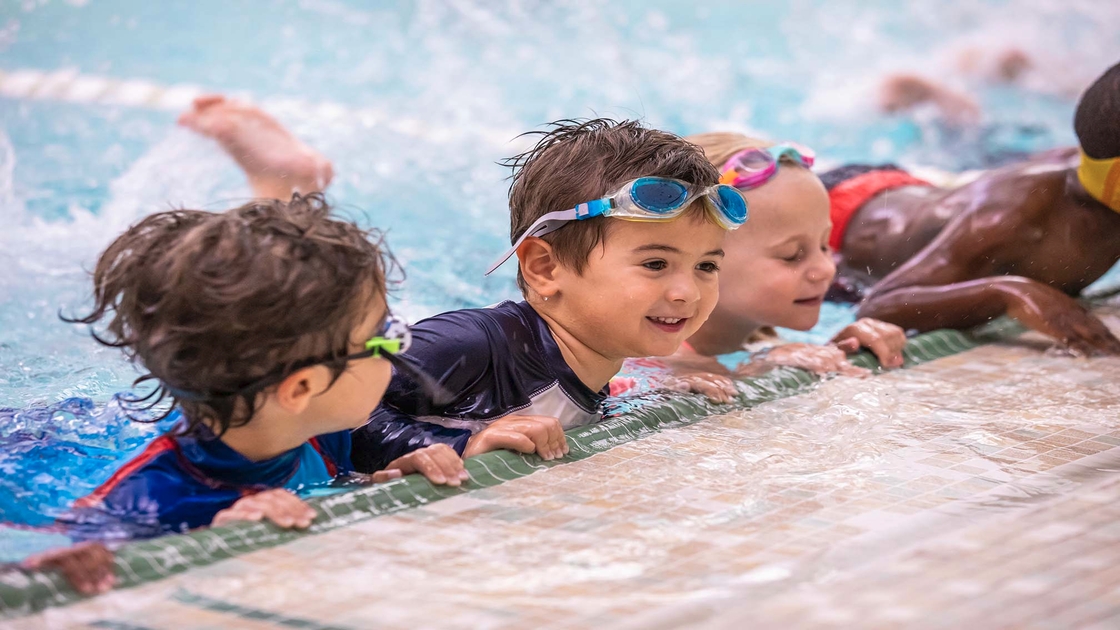
It happens at almost every swim school. One child splashes in without a second thought, while another grips the pool edge and refuses to let go. Parents watching from the viewing area can feel a quiet anxiety creeping in — are we behind? Should they be doing more by now?
The short answer is no. There is no single right age at which a child should be able to swim, and comparing your child’s progress to the child in the next lane rarely helps anyone.
Why Progress Looks Different for Every Child
Children develop at different rates across every area of life — talking, walking, reading — and swimming is no different. A child’s readiness to learn in water is shaped by a mix of physical development, temperament, and past experience.
Some children have had lots of early water exposure through bath time play or family holidays, which builds familiarity before lessons even begin. Others may have had a frightening experience — a splash to the face, a slip at the poolside — that has left them more cautious. Neither child is wrong; they are simply starting from different places.
Sensory sensitivities can also play a role. For some children, the noise of an indoor pool, the smell of chlorine, or the feeling of water on their face is genuinely overwhelming. With the right support and enough time, most children move through these barriers at their own pace.
Age Is a Guide, Not a Deadline
You may have seen guidance suggesting children should be swimming independently by a certain age. These figures are averages drawn from large groups of children — they tell us very little about any individual child.
A child who starts lessons at three and a child who starts at six may well reach the same milestones at the same time. What matters far more than the starting age is consistency — regular lessons, calm encouragement at home, and a teacher who understands how to build trust in the water gradually.
It is also worth remembering that swimming involves several skills at once: breath control, body position, coordination, and water confidence. Children often master these in a different order, and some need longer to piece them all together into something that looks like swimming.
How You Can Help at Home
You do not need a pool to support your child’s progress. Positive conversations about swimming, reading books with water themes, and letting them play freely in the bath can all help build a relaxed relationship with water.
Try to keep your own anxieties out of the conversation where possible — children pick up on adult worry quickly, and it can reinforce the idea that water is something to fear. Focus on effort and enjoyment rather than achievement. “You were really brave putting your face in today” lands very differently from “Why can’t you kick your legs yet?”
If you are concerned about your child’s progress, speak to their swim teacher directly. A good teacher will be able to tell you exactly where your child is, what the next small step looks like, and how you can support them. They will not judge you for asking.
The Goal Is a Child Who Feels Safe in Water
Ultimately, the aim of swimming lessons is not to produce a competitive swimmer by age seven. It is to give every child the skills and confidence to be safe around water — and to enjoy it.
Some children arrive at that point at four years old. Others get there at eight or nine. Both outcomes are a success. The children who take longer are not failing; they are simply taking the route that works for them.
Keep showing up, keep celebrating the small wins, and trust that the progress is happening — even on the days when it does not feel like it.