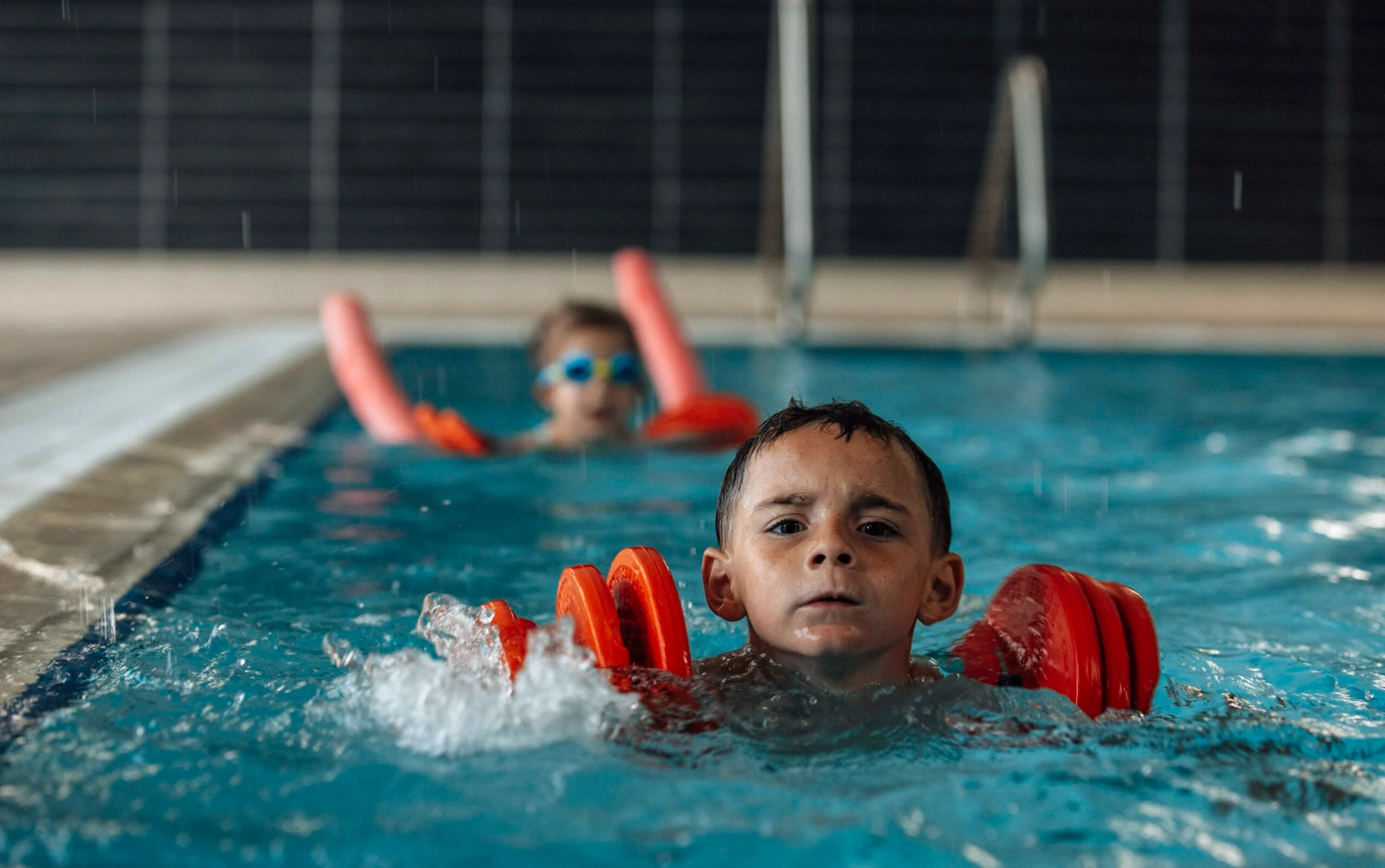
The pool is busy, the sun is out, and your child was fine last week. Then suddenly they’re clinging to the side, crying, refusing to let go. Water panic can come out of nowhere, and it catches parents off guard just as much as the children themselves.
With the school holidays in full swing and families across south-west Scotland heading to coastal parks and outdoor pools, more children are spending time in and around water right now. That means more chances for wobbles — and more chances to handle them well.
Stay Calm First — Your Child Is Reading You
Children are remarkably good at picking up on adult anxiety. If you gasp, rush over, or look alarmed, that signals to your child that something genuinely dangerous has happened. Even when your instinct is to pull them out immediately, try to slow down your own response first.
Get down to their eye level if you can. Speak slowly and quietly. A calm, steady voice — not a cheerful, forced one — does more to settle a panicking child than anything else you can say.
Physical reassurance matters too. A hand on the shoulder or letting them hold your arm while still in the water (if it’s safe to do so) can help them feel grounded without reinforcing the idea that the water itself is the threat.
What Not to Say in That Moment
This is where a lot of well-meaning parents accidentally make things harder. Some common phrases to avoid:
- “You were fine a minute ago” — true, but unhelpful. It can make a child feel silly for being upset.
- “Don’t be scared” — dismisses their feelings without addressing them.
- “Come on, everyone’s watching” — adds social pressure on top of fear. Avoid this one entirely.
- “You have to get back in, we’ve paid for this” — understandable frustration, but it creates a negative association with water that’s hard to undo.
Instead, try something like: “I can see that felt scary. You’re safe. Let’s just sit here for a moment.” Naming the feeling and confirming their safety tends to work much better than trying to logic them out of it.
When It’s Time to Pause — and That’s Okay
There’s a difference between gently encouraging a child to try again after a moment’s rest, and pushing them back in before they’re ready. Forcing the issue usually backfires — especially in a busy holiday pool environment where the noise and activity can already feel overwhelming.
If your child has had a genuine fright — perhaps a wave caught them off guard at the beach near Sandyhills, or the outdoor pool at a holiday park like Brighouse Bay or Auchenlarie felt bigger and louder than expected — it’s completely reasonable to call it a day for that session. One stopped session will not set their swimming back significantly. A traumatic experience that gets pushed through might.
Come back the next day with lower expectations. Paddling or sitting on the steps counts. Watching other children enjoy the water counts. Rebuilding positive associations is the goal, and it doesn’t always look like swimming.
After the Holiday: Building Confidence in a Structured Setting
If your child has had a tough experience with water this summer, regular lessons in a calm, structured environment can make a real difference before the next holiday season. Small groups, familiar faces, and consistent progressions help children rebuild trust in the water — and in themselves.
Panic is not a sign that your child will never be a confident swimmer. It’s a sign that they need the right kind of support, at the right pace. Most children get there — they just need adults around them who don’t panic either.