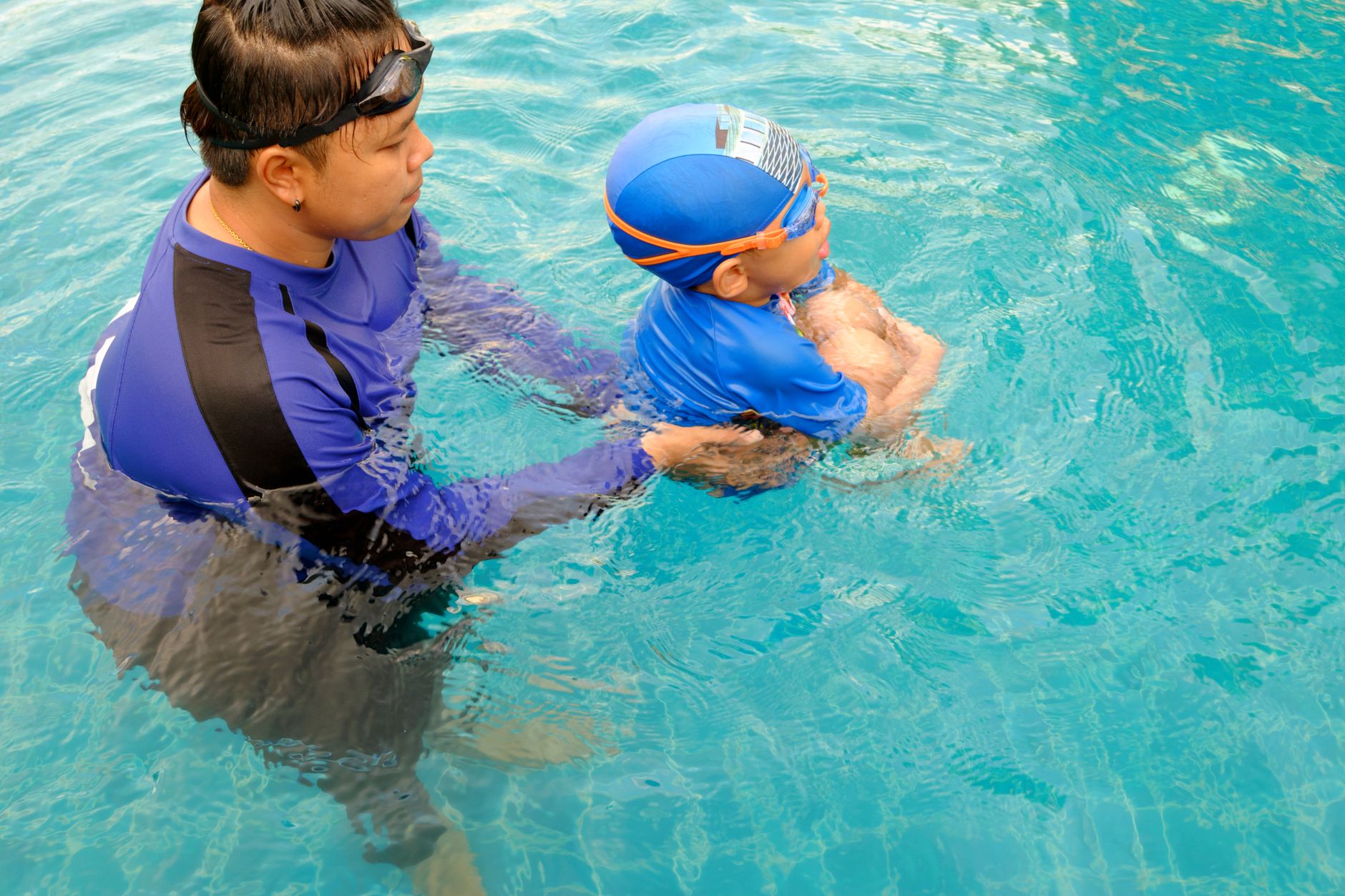
With the outdoor season well and truly behind us and the school routine back in full swing, autumn is a brilliant time to get toddlers into the water. Indoor swimming lessons fit neatly into evenings and weekends, and the earlier children build water confidence, the better. If you’re based in Dumfries & Galloway and starting to look around, here’s what actually matters when choosing a local instructor.
Check the Qualification: What Is an SSTQ?
In Scotland, swimming teachers are expected to hold a qualification recognised by Scottish Swimming, the national governing body. The Scottish Swimming Teaching Qualification (SSTQ) is the standard to look for. It covers child development, water safety, lesson planning, and teaching technique — not just the ability to swim well.
Ask any prospective instructor which qualification they hold and when it was last renewed. Reputable teachers will be happy to tell you straight away. If someone is vague about their credentials, that’s worth noting.
Teacher-to-Child Ratios in Toddler Lessons
Ratios matter enormously at this age. For non-swimming toddlers (typically under three), lessons should involve a parent or carer in the water, with no more than around ten pairs per teacher. For slightly older toddlers beginning independent water work, smaller groups — ideally six or fewer — allow the instructor to give meaningful feedback and keep a close eye on safety.
It’s worth asking the specific ratio before you book, not just accepting a vague description of “small groups”. A good instructor will be upfront about this and able to explain how the class is structured.
The Venue: Warmth, Access, and Atmosphere
Pool temperature is particularly important for young children. Toddlers lose body heat quickly, so the water should be at least 30°C — many dedicated teaching pools sit closer to 32°C. Before committing to a block of lessons, it’s worth visiting the pool to get a feel for it.
Rebecca teaches at Auchenlarie Holiday Park in Gatehouse of Fleet and Castle Cary Holiday Park in Creetown — both have on-site pools that are well-suited to young learners. Holiday park pools often have a warmer, more relaxed atmosphere than larger public facilities, which can help nervous toddlers settle in.
Elsewhere in the region, families have other options depending on where they live. The DG1 Leisure Complex in Dumfries is the largest facility in the area with three pools, and there are council pools in Castle Douglas, Annan, Stranraer, Newton Stewart, Kirkcudbright, and Sanquhar. For families thinking longer-term, Dumfries Amateur Swimming Club based at DG1 offers pathways into both competitive and recreational swimming once children are ready.
Questions Worth Asking Before You Book
Once you’ve found an instructor who ticks the boxes on qualifications and ratios, a few final questions can help you decide with confidence:
- Are lessons term-time only, or do they run year-round?
- What happens if my child misses a session due to illness?
- How are children progressed through stages — and how will I know when my toddler is ready to move up?
- Is the pool accessible for pushchairs and changing with a toddler?
Rebecca teaches year-round across Dumfries & Galloway, working with children and adults of all abilities. If you’re looking to get your toddler started this autumn — before the darker evenings make weekend plans harder to stick to — contact Rebecca directly to find out about availability at Auchenlarie or Castle Cary.